
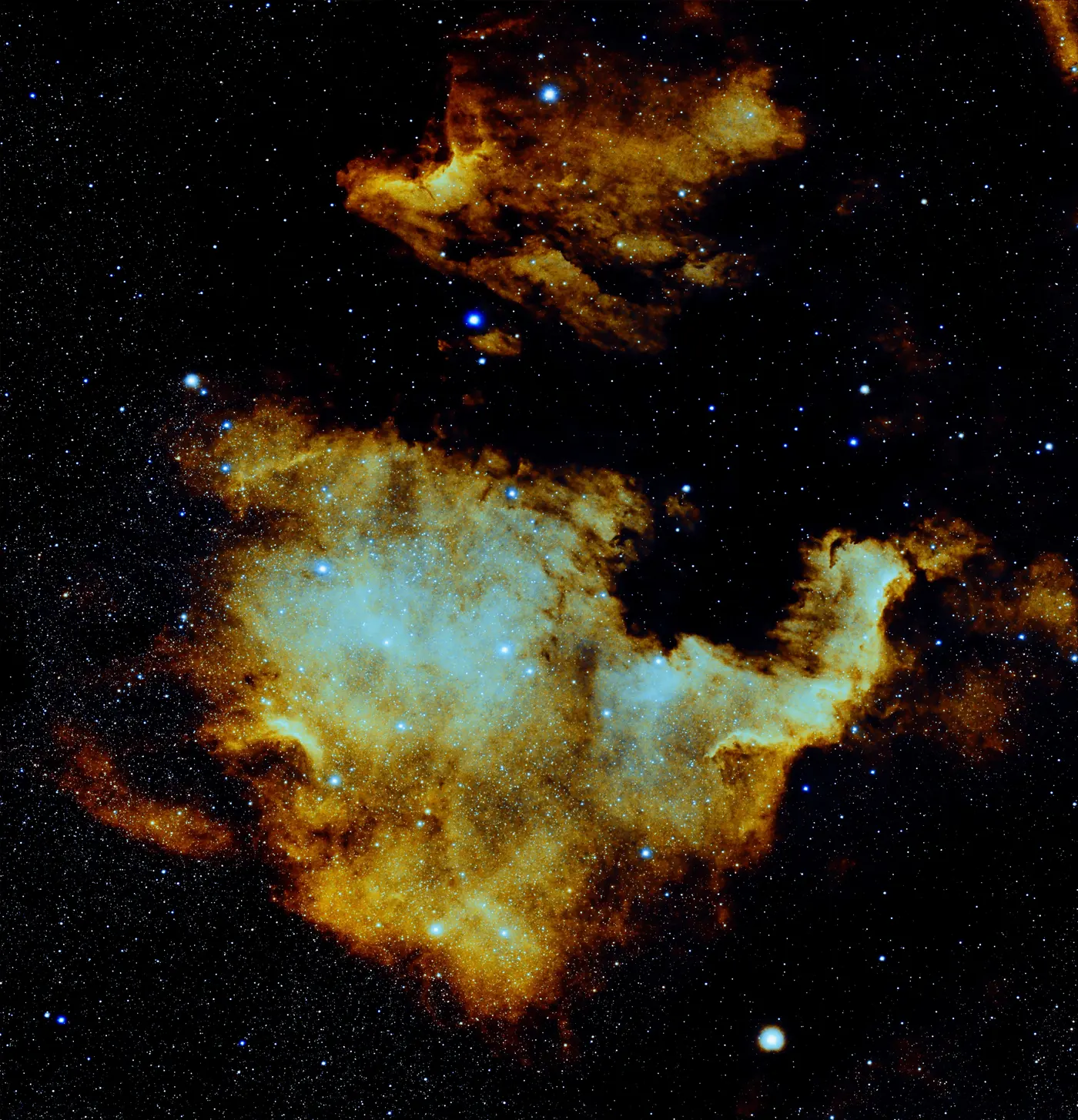
NGC 7000 · IC 5070 · Cygnus
Amérique du Nord et Pélican
22h 12m 3 shots
0 towards 25h 12m · cumulative integration on this object
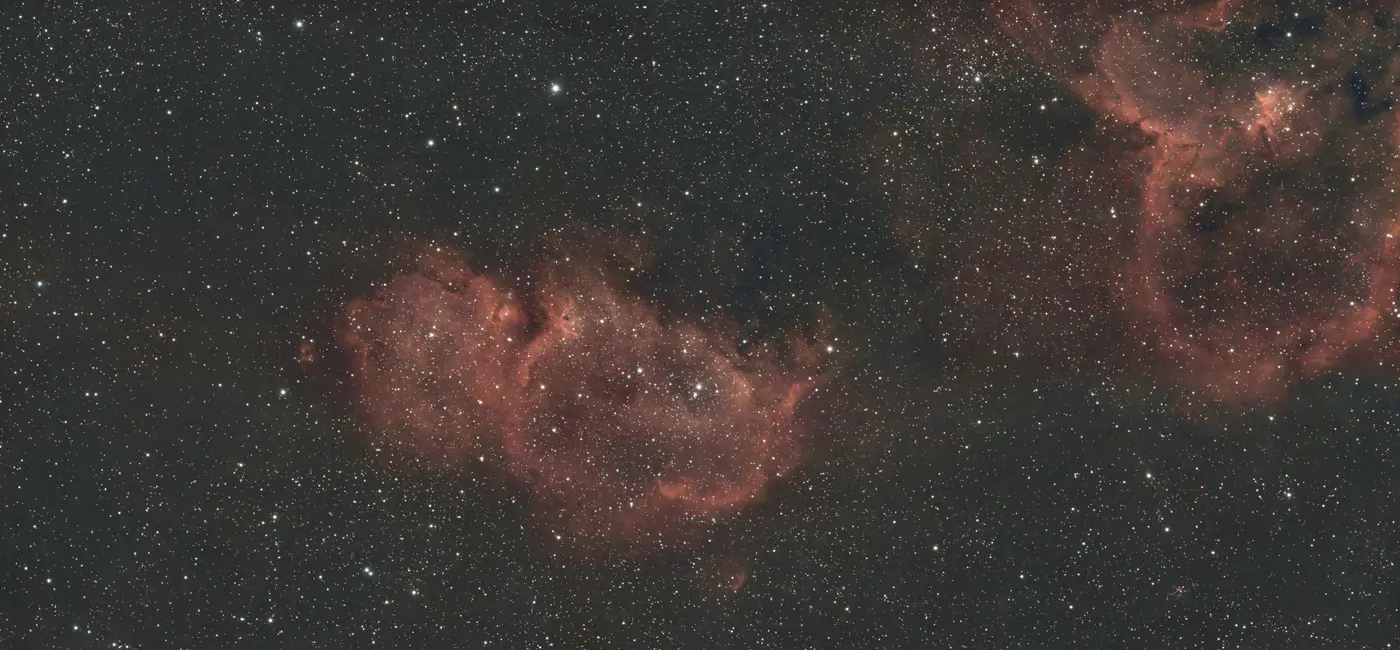
Nebula · Cepheus
A region of ionised hydrogen in Cepheus, about 1,300 light-years away.
Le Cœur et l'Âme · Photograph by the author · 3h 47m of exposure, DwarfLab DWARF 3
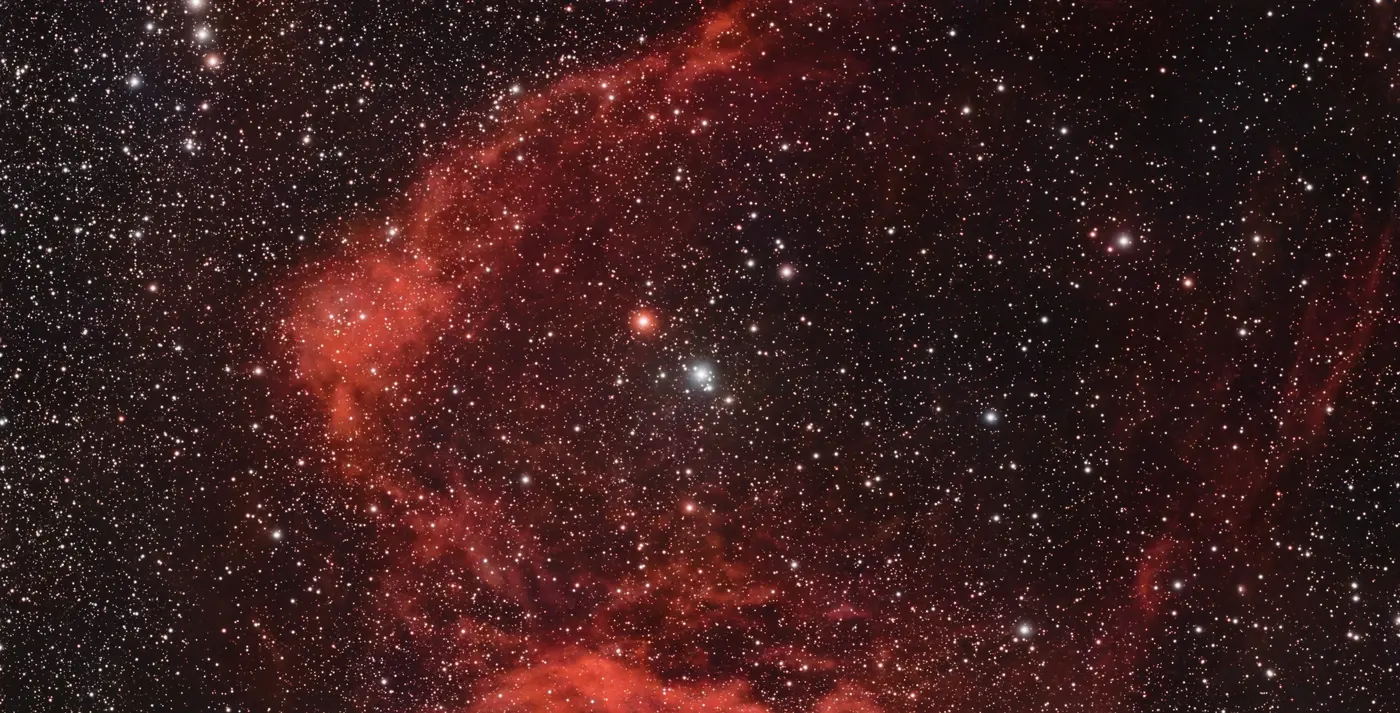
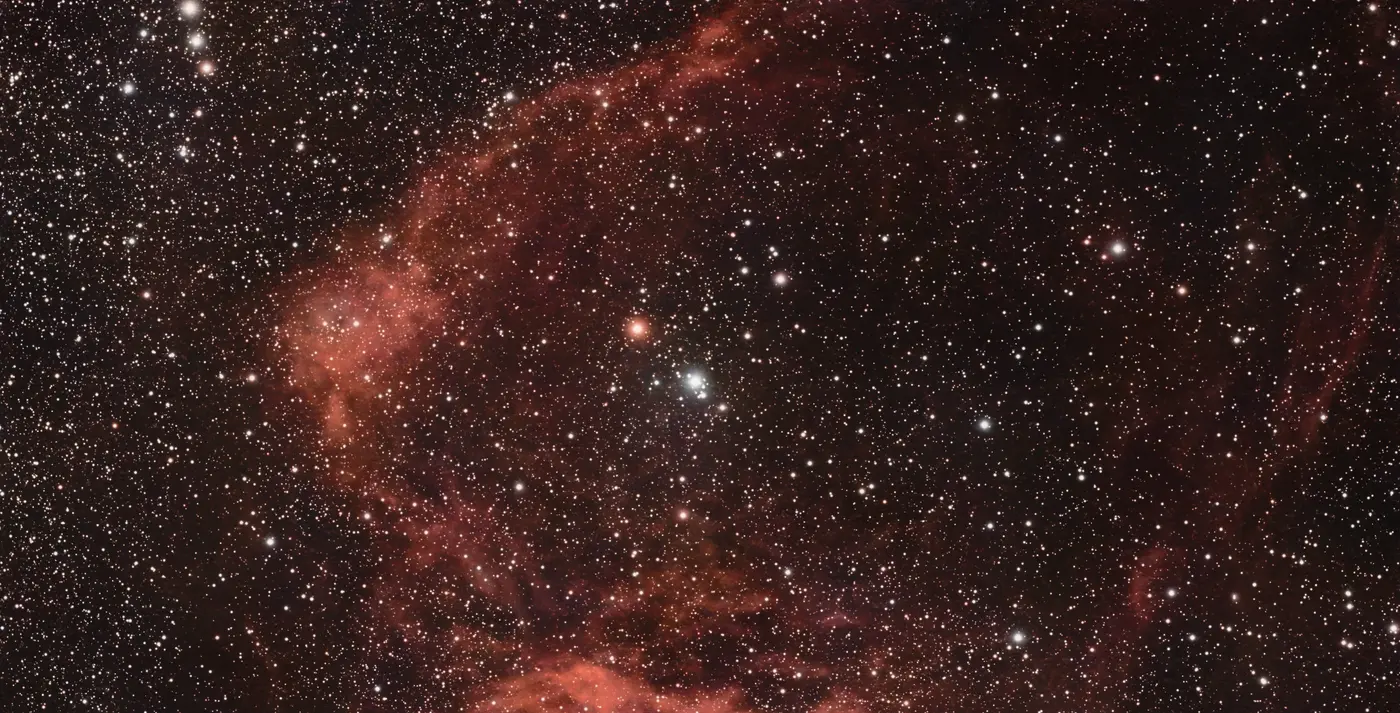
Stewart Sharpless catalogued it in 1959 as number 129; it covers 140 arcminutes on a side, and its arc shape earns it the nickname of the Flying Bat. In the photo, the red arc, thicker on its left, fills the frame and spills beyond it, around a group of bluish stars. The main photo, whose caption reads “HO”, takes up the dual-band exposure of the second one and extends it; neither of them shows Ou4, a very faint nebula that the APOD reveals in the same place, in the blue-green of oxygen.
Sources: Wikipédia en français, Sh2-129, NASA, APOD du 27 octobre 2016, « A Giant Squid in the Flying Bat ». A figure wrong? Report it.
25h 12m 2 shots
0 towards 25h 12m · cumulative integration on this object
Temps d'intégration : the total exposure time, the sum of every exposure stacked on an object.
Filtre duo-bande : it lets through only the two colours of emission nebulae.
Every shot
Sorted from the deepest to the shortest. The signal adds up from one session to the next: that is what sets a smart telescope apart from a camera.
25h 12 30 October 2026
DwarfLab DWARF 3 · Dual-band
19h 54 6 October 2026
DwarfLab DWARF 3 · Dual-band
In the same family
NGC 7000 · IC 5070 · Cygnus
22h 12m 3 shots
0 towards 25h 12m · cumulative integration on this object
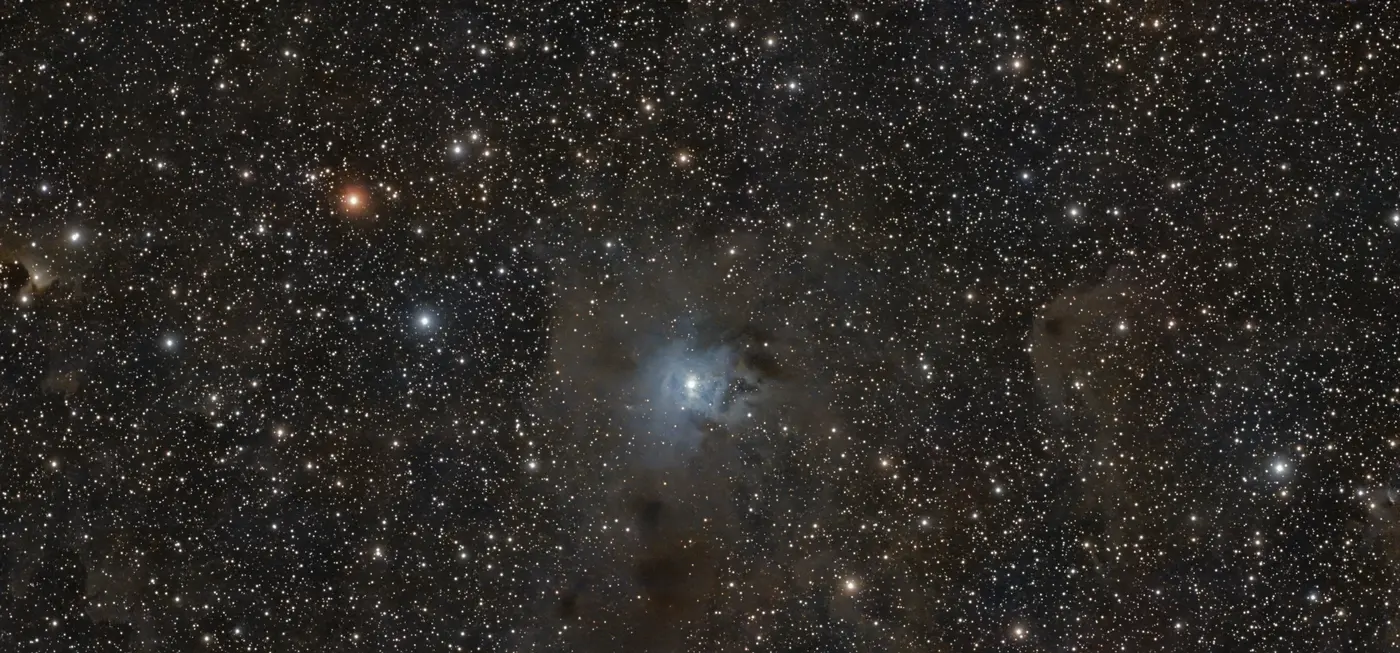
NGC 7023 · Cepheus
11h 34m 4 shots
0 towards 25h 12m · cumulative integration on this object
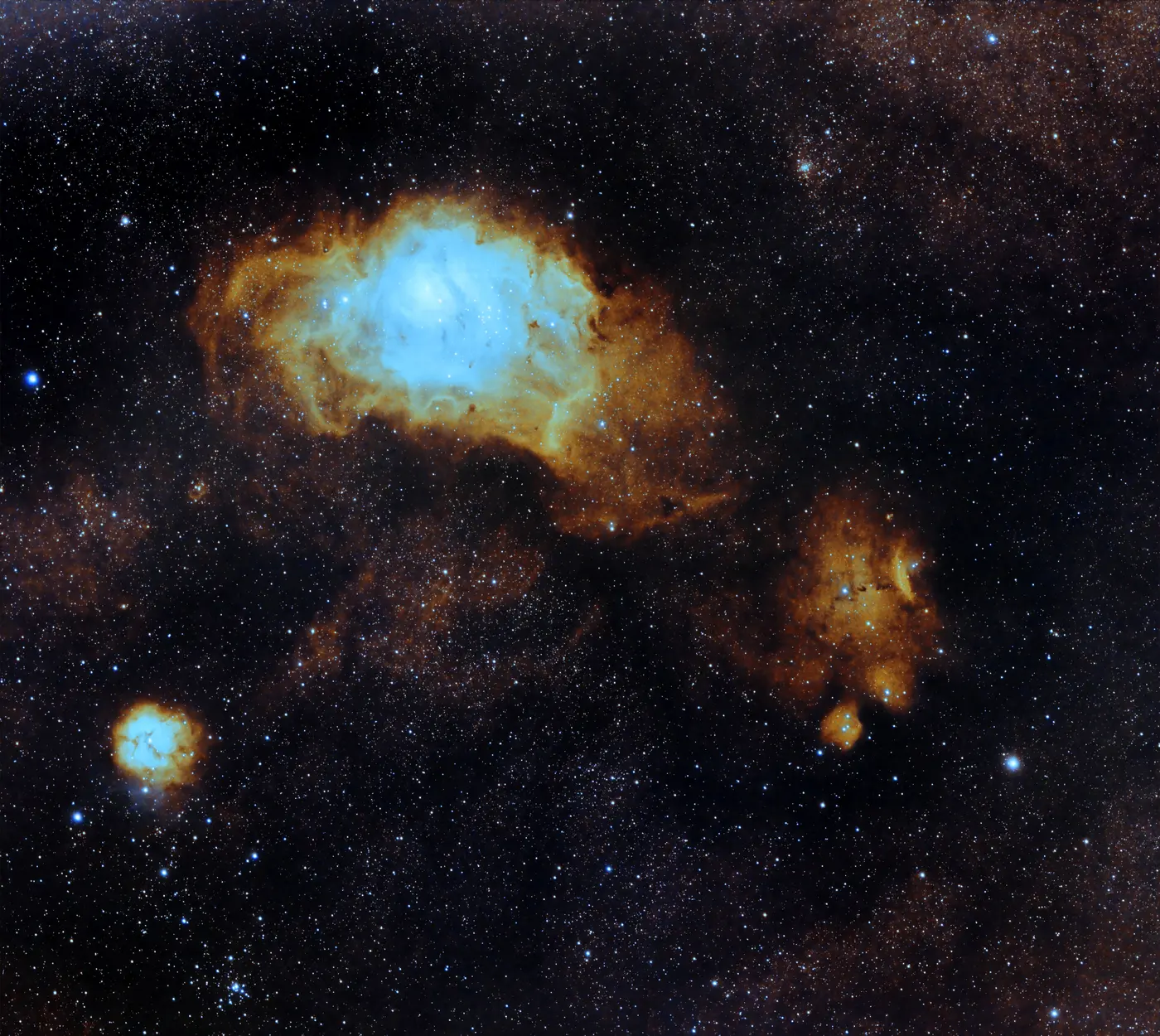
M8 · M20 · Sagittarius
11h 23m 1 shot
0 towards 25h 12m · cumulative integration on this object