
Vaonis · France
Vaonis Atlas
One mount, and 80 mm imaging modules that fix onto it without tools: one to start with, two on the same target to double the light. Alongside the all-in-one Vesperas, Vaonis offers an instrument you can upgrade.
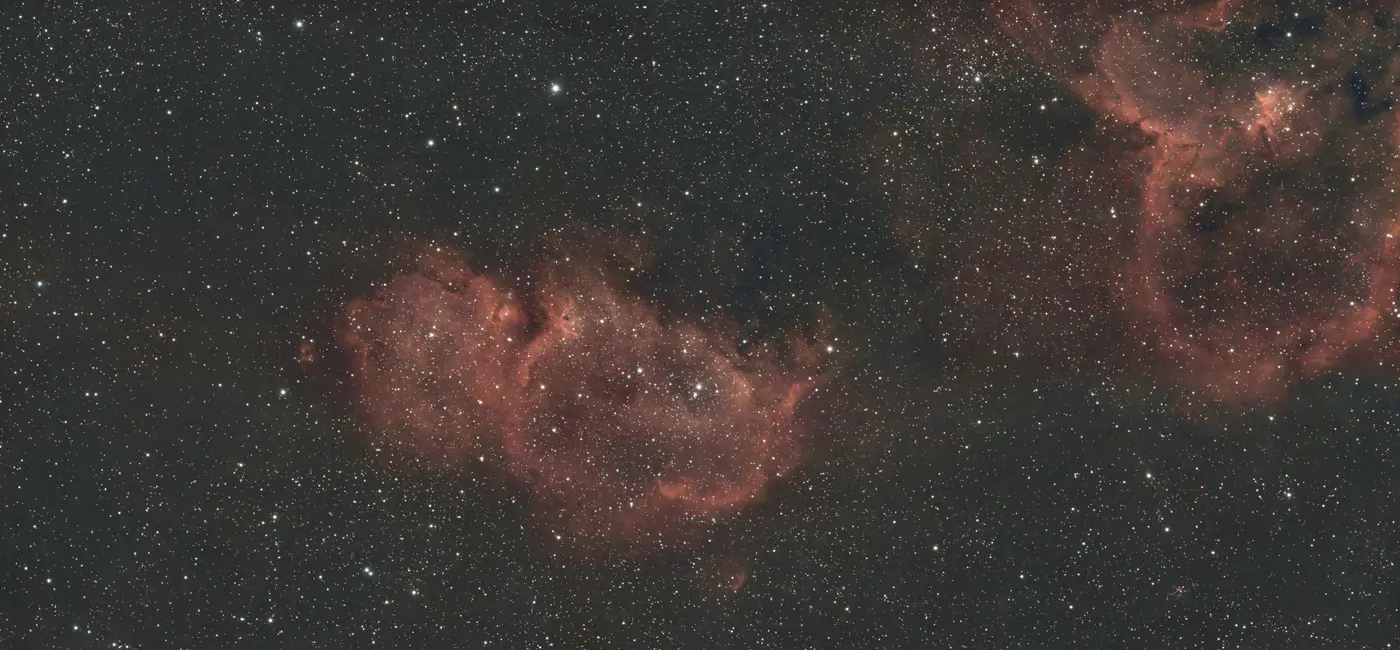
Le Cœur et l'Âme · Photograph by the author · 3h 47m of exposure, DwarfLab DWARF 3
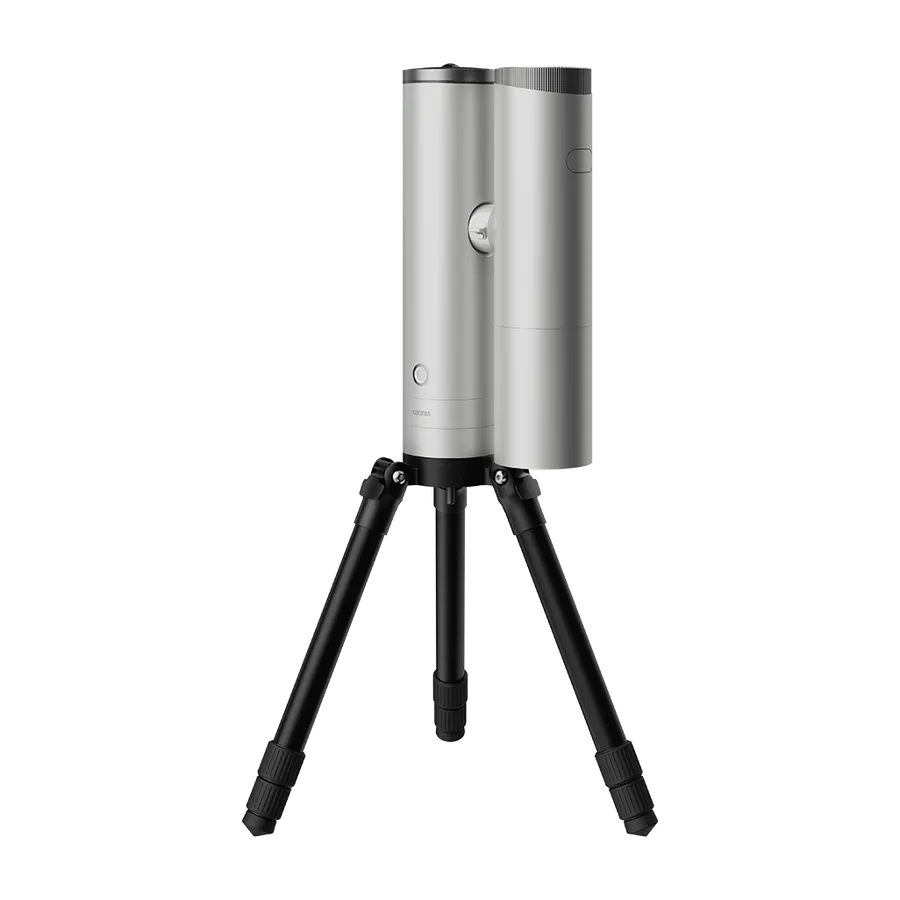
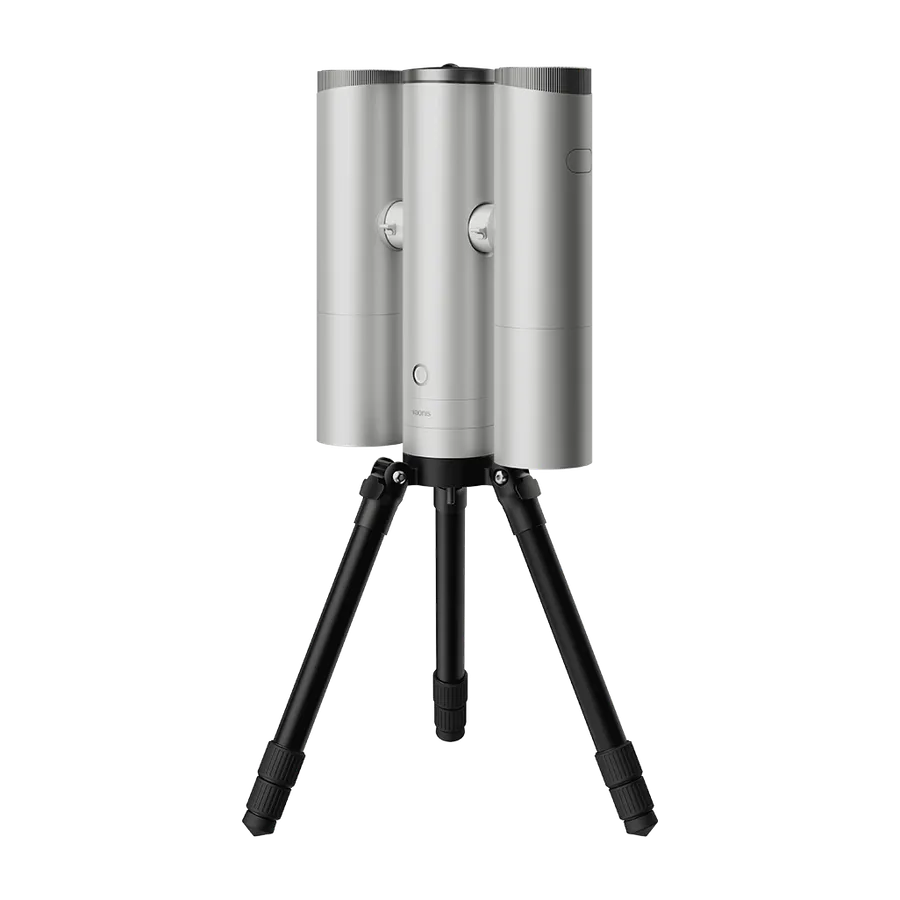
Single configuration, folded on its tripod, at three-quarters
≈ €4,990
≈ €3,990 at the launch price until 15 November 2026 · Twin ≈ €6,990, ≈ €5,490 at the launch price
List price recorded in 2026, excluding promotions and accessories. It is not an offer. The price offered to you arrives in writing.
This device can be ordered from me. No basket and no online payment: the price, the lead time and availability arrive in writing. I have never had it in my hands. That is written further down this entry, and I am not going to tell you otherwise in order to sell it to you.
The device photographs are the manufacturers' official images. UST is an authorised reseller for all five brands. No image comes from a competing reseller.
not tested In this catalogue: no shots at all. Entry built on public sources.
0 · no first-hand data
0 towards 170h · hours I have logged with this device, this is not a rating
For the image the l'Origin makes in 1h, it takes 4h 11m here.
This equivalence says nothing but speed. It says nothing about resolution, about the field, or about optical quality. f/2,2 on 152 mm and f/4,5 on 80 mm do not photograph the same objects. The calculation takes nothing but the published focal ratios, with sensor, sky and target held identical.
Rapport d'ouverture : the focal length divided by the diameter, written f/, and the smaller that number, the faster the image forms.
- Aperture
- 80 mm
- Focal length
- 360 mm
- Focal ratio
- f/4.5
- Sensor
- Sony IMX585, format 1/1.2 inch, 11.2 × 6.3 mm, 2.9 µm photosites
- Resolution
- 3,840 × 2,160 px (8.3 Mpx)
- Built-in filters
- None · 1.25 inch filter drawer, automatically recognised Vaonis filters announced for late 2026
- Mount
- Motorised altazimuth · equatorial table announced for the second half of 2027
- Weight
- 6.5 kg (Single, mount 3.5 kg and imaging module 3 kg, sum of the two published masses · Twin 9.5 kg)
- Software
- Gaia (iOS, Android)
- Indicative price
- ≈ €4,990 (≈ €3,990 at the launch price until 15 November 2026 · Twin ≈ €6,990, ≈ €5,490 at the launch price)
Monture azimutale : it moves in altitude and in rotation, but the field turns during the night.
The device
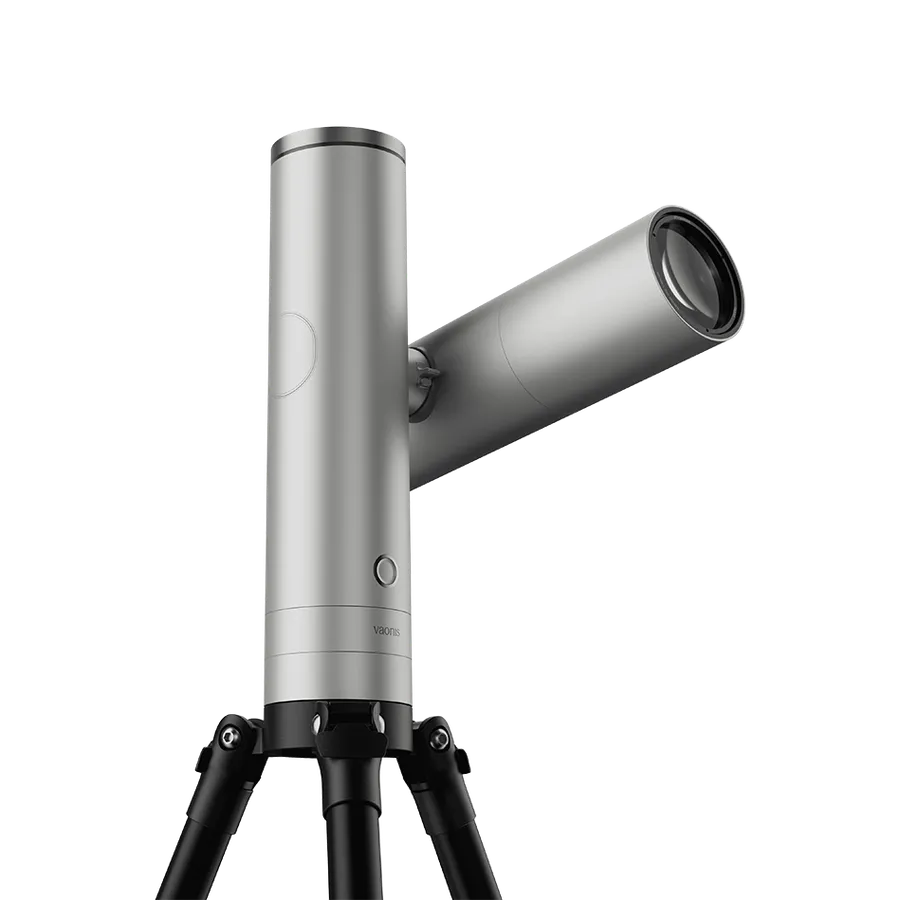
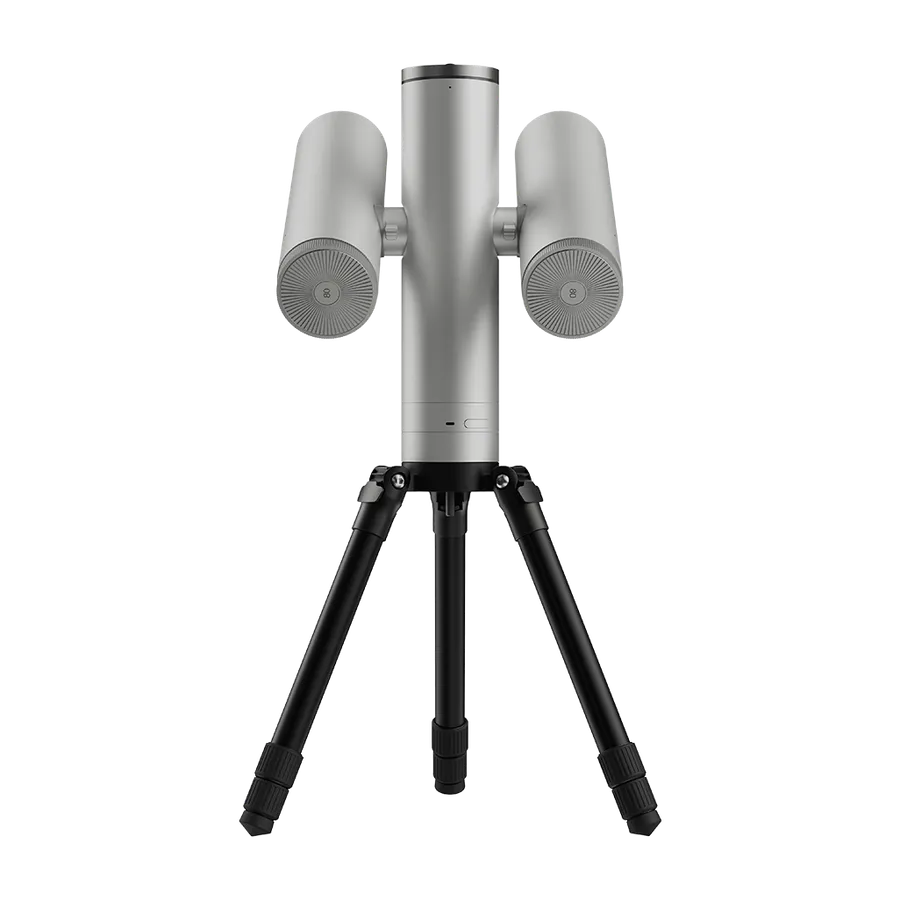
Seen from closer up
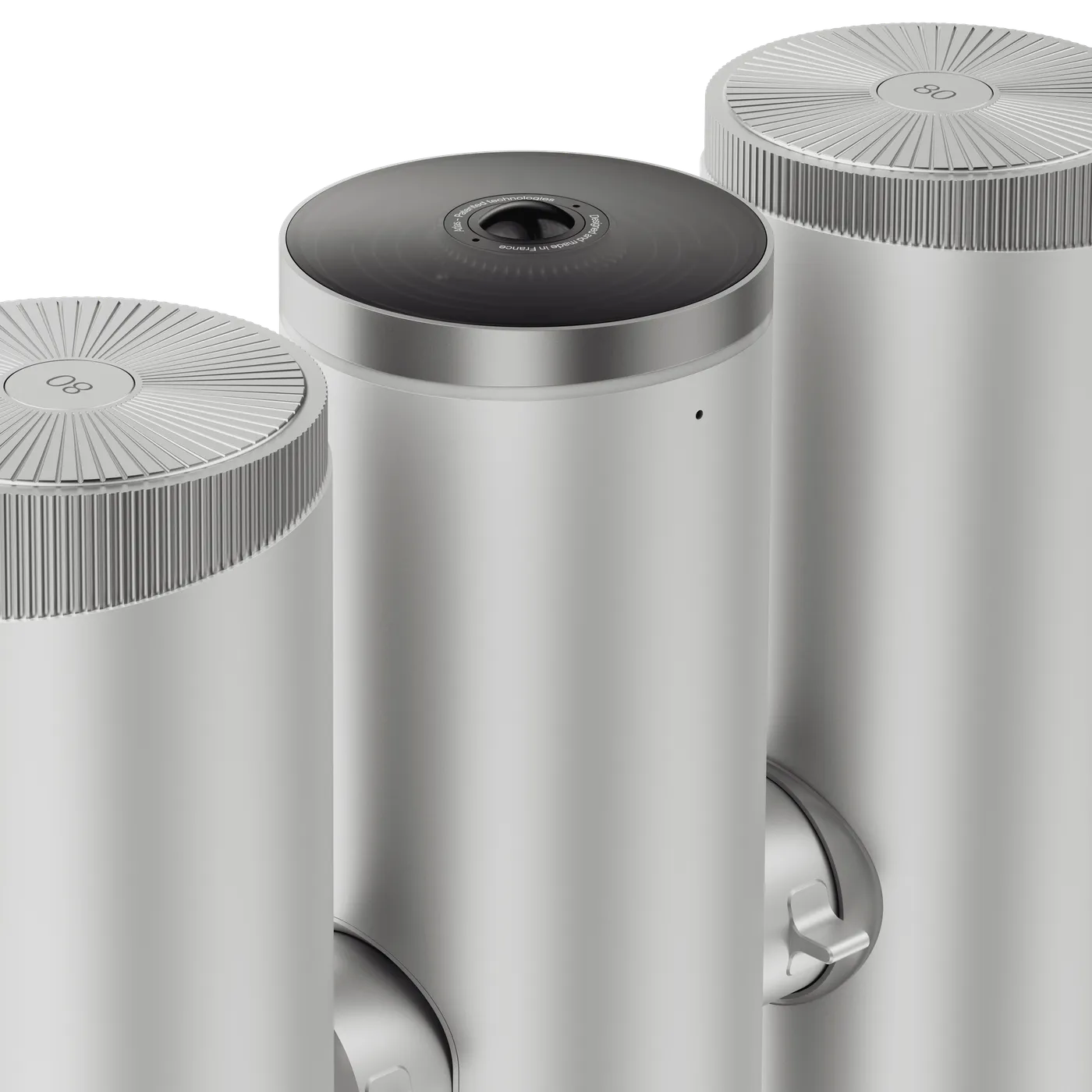
The other images published by Vaonis for this device.
Where it excels
What it does well
Nebulae, galaxies and clusters at 80 mm, on a mount you keep when you add a module. Vaonis recommends the Twin when faint objects come first and clear nights are short.
Strong points
- 80 mm of aperture against 50 on the Vesperas: 2.56 times more area to gather light, by calculation on the two published diameters.
- Modular: the imaging module fixes onto the mount through the Sky Dock interface, without tools and in under five seconds according to Vaonis. A second 80 mm module can be added later, and a planetary module is announced.
- In Twin, two modules aim at the same target and the app stacks their images: Vaonis quotes twice the light and a signal-to-noise ratio about 41% higher. The field stays that of a single module.
- Sky Guard, a 185° fisheye camera housed in the mount, films the whole sky live. You touch an object in that image, the Atlas points at it, and it finds the horizon, the Sun and the Moon on its own to initialise.
- Four lenses in three groups, with no mirror and no central obstruction. According to the optical calculations Vaonis publishes, the blur due to the lenses stays smaller than the unavoidable blur of diffraction (2.9 µm radius), from the centre to the edge of the sensor.
- Die-cast aluminium structure, rated IP64, usable from -20 to +40°C. Vaonis quotes the Vesperas in ABS, rated IP43.
- A ten year warranty on the mount and five years per module, against five years on the Vesperas. Aluminium tripod and carrying bag supplied with both configurations.
Weak points
- About €4,990 in Single, and €3,990 at the launch price valid until 15/11/2026: the most expensive in the panel after the Origin, and €2,000 more than the Vespera Pro 2.
- 6.5 kg in Single and 9.5 kg in Twin, tripod not included: the heaviest of the Vaonis devices compared here, against 5 kg for the Vesperas.
- The first deliveries are planned for March 2027. All the published sky images come from Vaonis, and no independent review had appeared when recorded on 21/10/2026.
- No built-in filter, only a drawer in the 1.25 inch format. The automatically recognised Vaonis filters and the solar filter are only announced for late 2026.
- No equatorial mode before the equatorial table, announced for the second half of 2027 with no published price. Vespera accessories do not fit: Vaonis writes so in its FAQ.
- Six hours of battery, against eleven on the Vespera 3 and Pro 2. Storage goes onto a microSD card, and no internal capacity is published.
- A native field of 1.78° by 1.00°, narrower in both directions than that of the Vespera 3, 2.5° by 1.4°. The mosaic goes up to 32 Mpx, against 50 on the Vespera Pro 2.
In practice
Starting out, observing, setting up

-
01
The focal ratio printed here, f/4.5, is the one Vaonis publishes for one module, and the calculation on the published 80 mm and 360 mm lands on it. The f/3.2 of the Twin is an equivalent in light gathering: Vaonis itself points out that it is not the ratio of each module.
-
02
Vaonis publishes the mass of the mount, 3.5 kg, and that of the module, 3 kg, but not the total. The 6.5 kg in Single and 9.5 kg in Twin printed here are the sum of those published masses, tripod not included.
-
03
In its shop, Vaonis shows €4,990 in Single and €6,990 in Twin, struck through, and takes pre-orders at €3,990 and €5,490 until 15/11/2026. The price after that is not yet published. The pre-order can be cancelled up to 30 days after delivery, with a full refund.
-
04
Five of the seven sample images on the Vaonis presentation page were made in equatorial mode. That mode needs the table announced for the second half of 2027: until then, the mount works in alt-azimuth.
-
05
The sensor of the module, the Sony IMX585, is the one in the Vespera 3 and in the telephoto of the Seestar S30 Pro. The Sky Guard all-sky camera carries the IMX676, the main sensor of the Vespera Pro 2.
-
06
As recorded on 21/10/2026, the Gaia app is not yet in the app stores. Vaonis announces it for iOS and Android on its comparison page, and the Vesperas stay on Singularity.
Images made with this device
No images: it has not been tried
This device has never been used to make one of my images. The photographs above show the device, and they come from the manufacturer. No sky image is borrowed to fill the space. Its entry rests on the published sources, listed further down. Its integration time scale therefore stays at zero.
Temps d'intégration : the total exposure time, the sum of every exposure stacked on an object.
0 images · space left empty
Outside the catalogue, I publish 9 photographs. None of them appears on this entry, and that is deliberate: not one of them shows this device, and an image placed there would amount to a claim.
Compare it
Head to head with another device
Each page sets the two entries line by line and works out the differences. It writes at the top which of the two was used to make my images.
Getting hold of one
Order this Atlas
≈ €4,990 (≈ €3,990 at the launch price until 15 November 2026 · Twin ≈ €6,990, ≈ €5,490 at the launch price)
Market price recorded in 2026 from the sources cited below. It is not a selling price, and it does not constitute an offer. Your price, your lead time and availability appear in the written reply.
Say what you want to photograph, and from what sky. The answer says whether this device suits. If not, it says which one suits better. Are you looking for a second-hand one, or do you have a device to trade in? Write it in the message. The answer will be straight, including when it is no.
Sources
Where these figures come from
- Vaonis, fiche technique de l'Atlas
- Vaonis, fiche boutique de l'Atlas, Single et Twin, prix de lancement et précommande
- Vaonis, page de présentation de l'Atlas en anglais
- Vaonis, tableau officiel de comparaison des modèles (application Gaia, iOS et Android)
- PetaPixel, annonce de l'Atlas du 15/10/2026
- Announced in October 2026, available for pre-order when recorded (October 2026): Vaonis, fiche boutique de l'Atlas (données Shopify, date de mise en ligne)
The prices are indicative and recorded in 2026. A specification wrong or out of date? Report it.