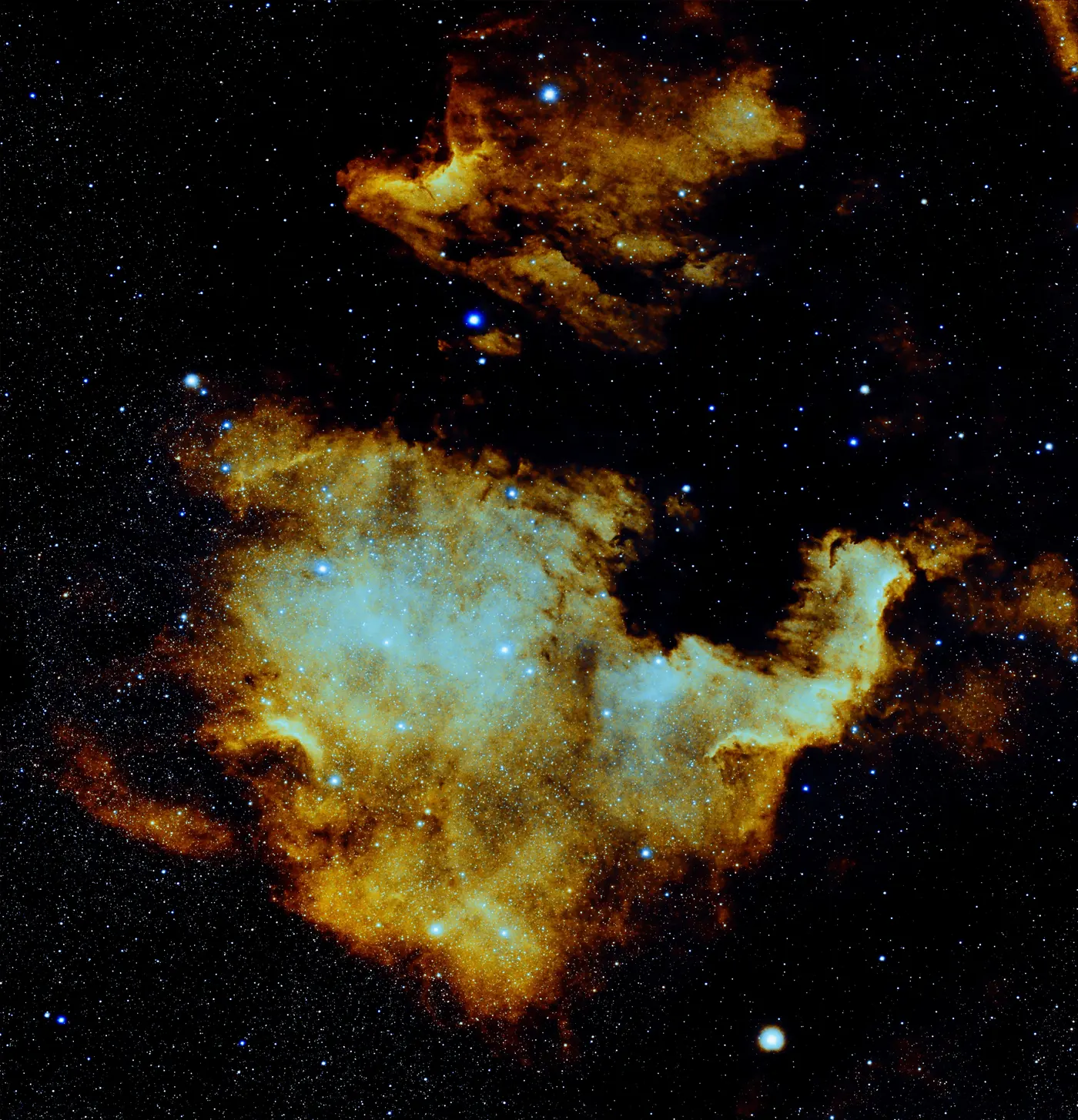
NGC 7000 · IC 5070
Comparing two devices
Let it be said before anything is compared: the evidence here exists on one side only. 5 shots, 4 objects and 62h 37m with the Vaonis Vespera Pro 2. Nothing with the Vaonis Atlas, which has never been in my hands. Everything that follows about the Vaonis Atlas comes from published sources, listed at the foot of the page.
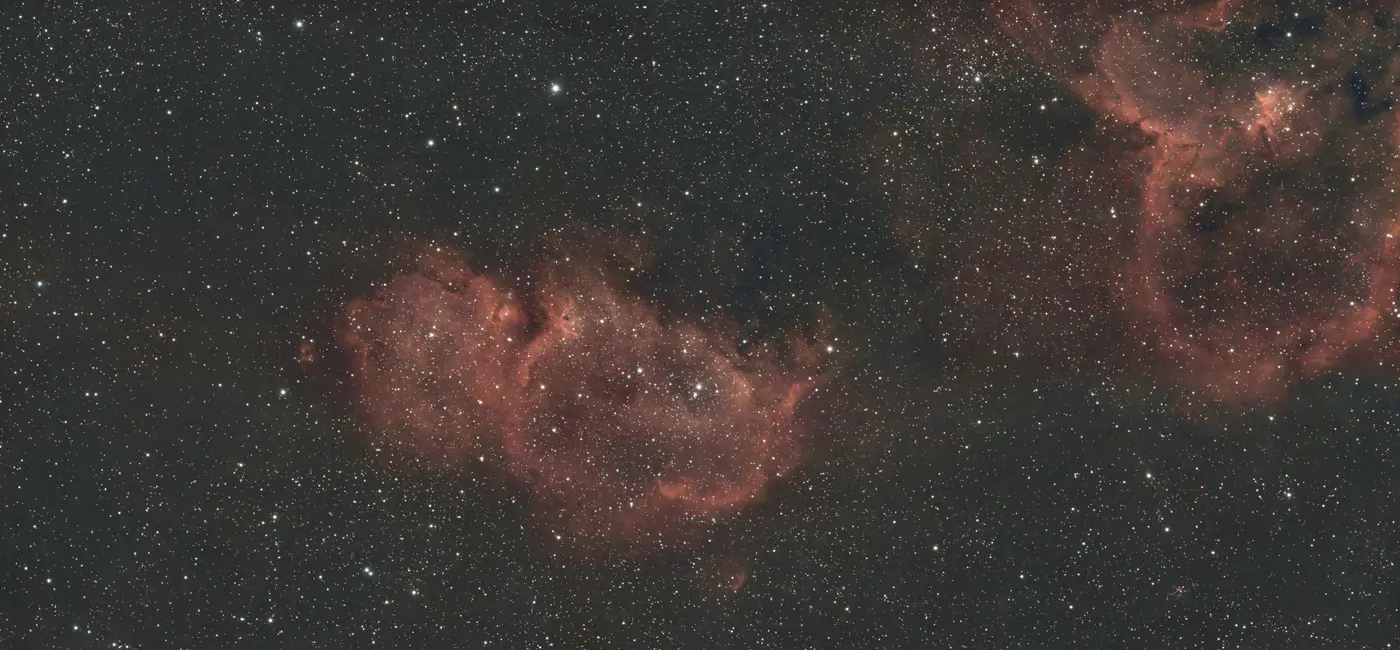
Le Cœur et l'Âme · Photograph by the author · 3h 47m of exposure, DwarfLab DWARF 3
not tested Vaonis Atlas
0 · no first-hand data
0 towards 170h · hours I have logged with this device, this is not a rating
recorded first hand Vaonis Vespera Pro 2
62h 37m
0 towards 170h · hours I have logged with this device, this is not a rating
Line by line
Every value comes from the entry for that device, where it carries its source. The difference column is worked out here, from those two values. It gives the size of the gap, never its direction: the two columns before it already say that. It stays empty on lines with no number. It stays empty too wherever a percentage would mean nothing.
Rapport d'ouverture : the focal length divided by the diameter, written f/, and the smaller that number, the faster the image forms. Monture azimutale : it moves in altitude and in rotation, but the field turns during the night.
| Specification | Vaonis Atlas | Vaonis Vespera Pro 2 | Difference |
|---|---|---|---|
| Aperture | 80 mm | 50 mm | 60% |
| Focal length | 360 mm | 245 mm | 47% |
| Focal ratio | f/4.5 | f/4.9 | |
| Sensor | Sony IMX585, format 1/1.2 inch, 11.2 × 6.3 mm, 2.9 µm photosites | Sony IMX676, format 1/1.6 inch, 7.0 × 7.0 mm, 2 µm photosites | |
| Resolution | 3,840 × 2,160 px (8.3 Mpx) | 3,536 × 3,536 px (12.5 Mpx) | |
| Built-in filters | None · 1.25 inch filter drawer, automatically recognised Vaonis filters announced for late 2026 | None | |
| Mount | Motorised altazimuth · equatorial table announced for the second half of 2027 | Motorised altazimuth | |
| Weight | 6.5 kg (Single, mount 3.5 kg and imaging module 3 kg, sum of the two published masses · Twin 9.5 kg) | 5 kg | 30% |
| Software | Gaia (iOS, Android) | Singularity (iOS, Android) | |
| Indicative price | ≈ €4,990 (≈ €3,990 at the launch price until 15 November 2026 · Twin ≈ €6,990, ≈ €5,490 at the launch price) | ≈ €2,990 | 67% |
Prices recorded in 2026, excluding promotions and accessories. The Vaonis Atlas and Vaonis Vespera Pro 2 entries each carry their own sources, one per specification.
What the data settles
The price. The cheaper is the Vaonis Vespera Pro 2, at ≈ €2,990. The Vaonis Atlas asks ≈ €4,990, which is 67% more. These are market prices, recorded in 2026 from the sources cited at the foot of the page. They are not my selling prices.
The diameter. The Vaonis Vespera Pro 2 opens at 50 mm. The Vaonis Atlas opens at 80 mm, which is 60% more. Diameter commands resolution, the finest detail that can come out of the exposure, whatever its length.
The time it takes. Vaonis Atlas is the faster of the two, f/4,5 against f/4,9. L'Atlas makes in 1h an image that takes 1h 11m au Vespera Pro 2.
The weight. The Vaonis Vespera Pro 2 weighs 5 kg. The Vaonis Atlas weighs 6,5 kg, which is 30% more. Weight says nothing about image quality: it says what you can carry.
These lines read published specifications and hours actually logged. They do not rank the two devices and do not rate their quality. An empty track is a device that was not tested, not a bad device. The exposure equivalence compares nothing but the published focal ratios, with sensor, sky and target held identical. It says nothing about resolution, about the field, or about optical quality.
The two devices
Vaonis · ≈ €4,990
One mount, and 80 mm imaging modules that fix onto it without tools: one to start with, two on the same target to double the light. Alongside the all-in-one Vesperas, Vaonis offers an instrument you can upgrade.
Strong points
Weak points
Vaonis · ≈ €2,990
Same optics as the Vespera 3, square 12.5 Mpx sensor with small photosites. Mosaics up to 50 Mpx: the highest final resolution of the devices compared here.
Strong points
Weak points
The images, from each side
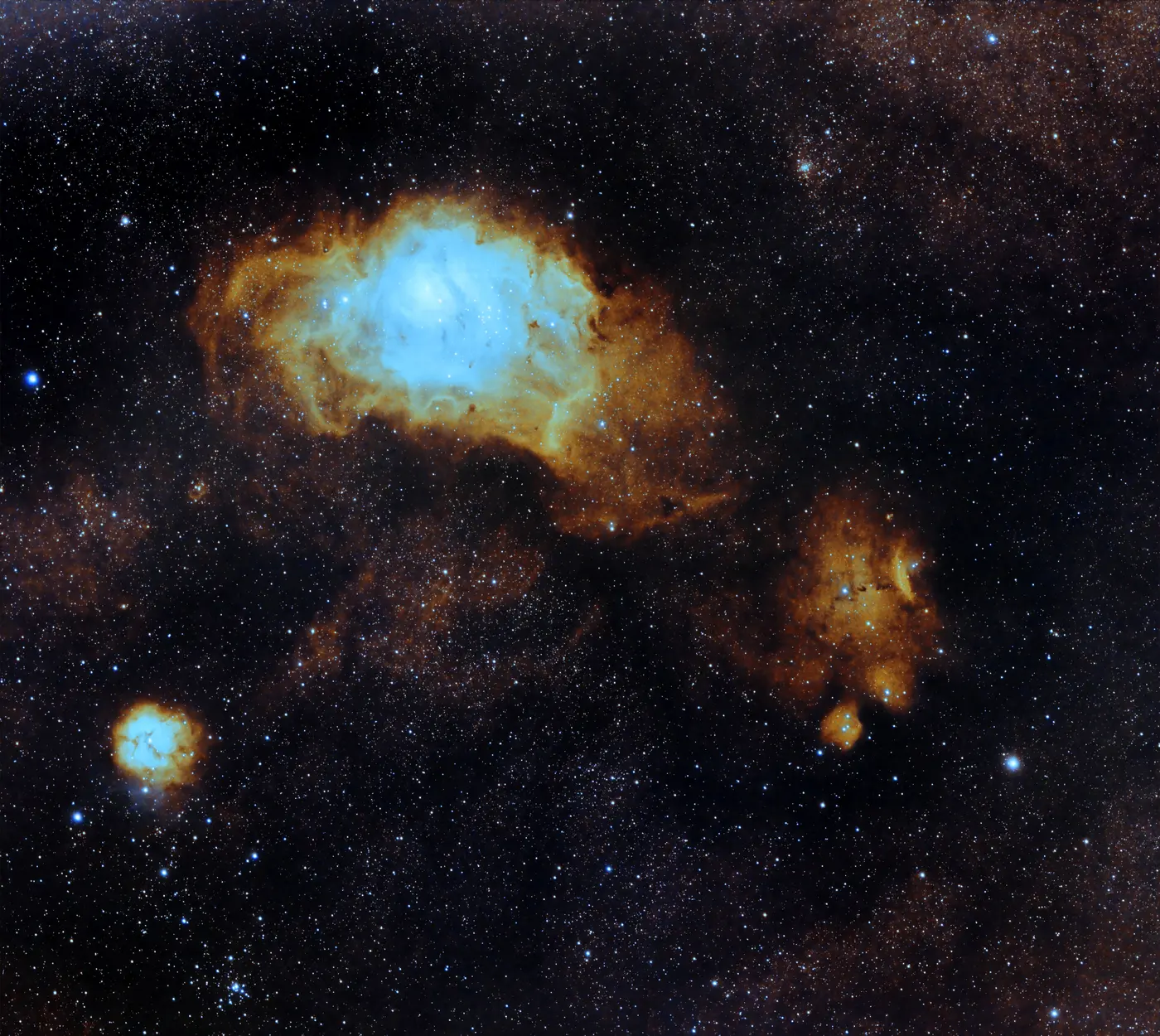
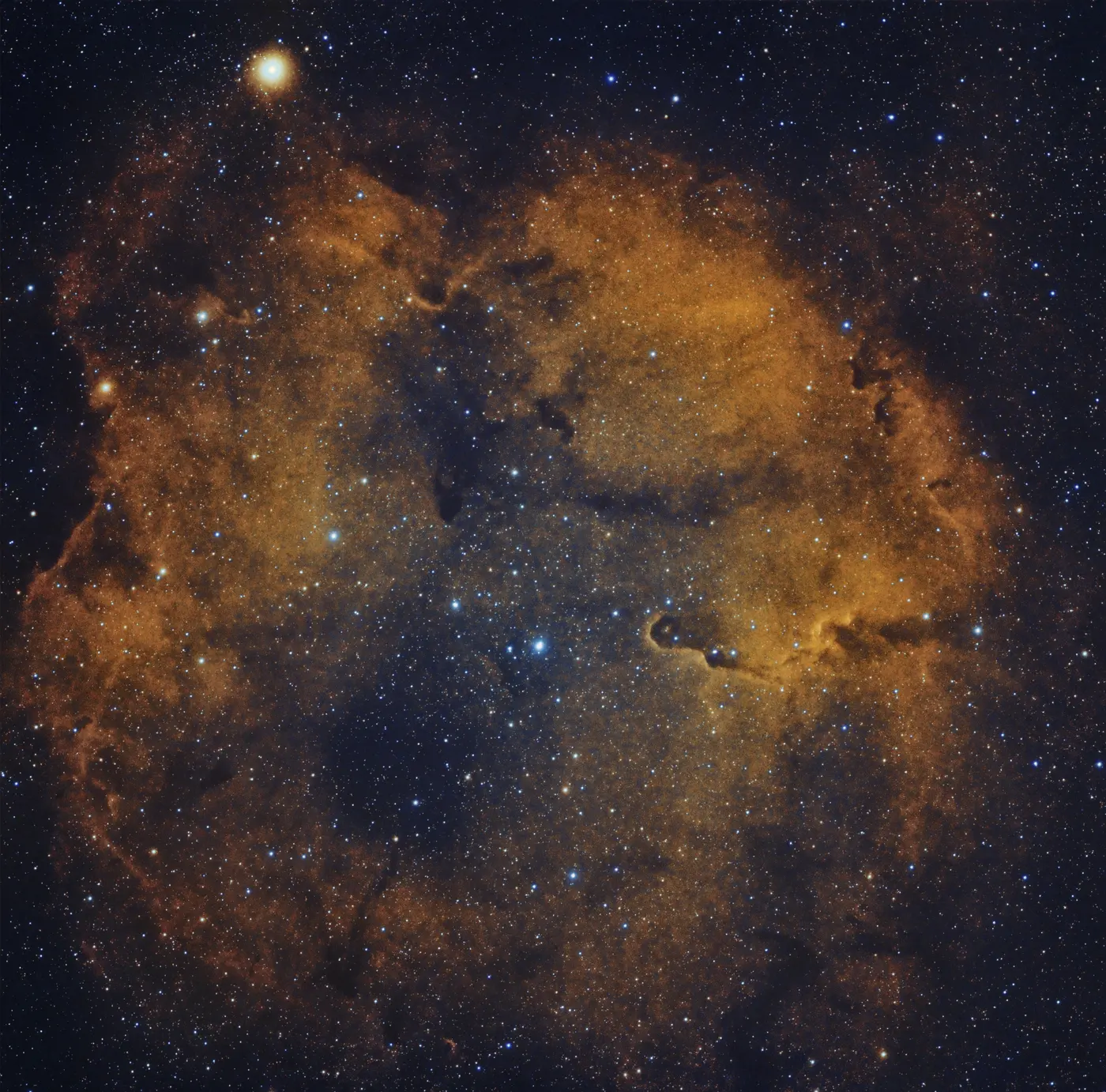
No manufacturer image, no stock image. Each thumbnail keeps the aspect ratio of its sensor, and carries the exposure time read off the caption the device burns in.
Vaonis Atlas
None of my images was made with this device. Nothing is borrowed from a stock library or a press release to fill the space. Its entry rests on the published sources, listed at the foot of this page. Its scale stays at zero.
Vaonis Vespera Pro 2
Getting hold of one
There is no basket and no online payment. You say which one interests you. You can also describe what you want to photograph, and from what sky. The answer comes in writing: a price, a lead time, and what the device can and cannot do. If neither of the two suits, it will say so, and it will say which one suits better.
The prices shown on this page are market prices recorded in 2026 from the sources below. They are not selling prices, and they do not constitute an offer. Your price, your lead time and availability appear in the written reply.
Sources
No value on this page is estimated. The differences are worked out from the values above. The focal ratio, for its part, is recalculated from the published aperture and focal length. A specification wrong or out of date? Report it.