
About
A site I run alone
The astrophotographs published here were made between October 2024 and October 2026, most of them from the Puy-de-Dôme, though not all.
By Gus
How these images are made
Three instruments, a Unistellar eQuinox 2, a DwarfLab DWARF 3 and a Vaonis Vespera Pro 2. None of them has an eyepiece. The image builds minute after minute, on the phone screen, by stacking short exposures. It can go on for several nights. That is what is called enhanced vision.
Empilement : adding short exposures together into one image, the signal adds up and the noise cancels out. Pose unitaire : one single exposure, before stacking.
The exposure time shown on each image is not an estimate. It is read off the caption the device burns in itself at the bottom of the frame. That caption is then cropped off for the web. The coordinates, the filter and the date come from the same place.
Checked, sourced, declared
- Checked: the exposure times, the dates, the coordinates, the filters. They come from the original files.
- Sourced: the specifications and the prices of the twelve devices. Every product entry carries its sources, and the year the prices were recorded.
- Declared: I sell the devices I compare, and it is written on every product entry.
- Never: a figure rounded in somebody's favour, an affiliate link.
- Cumulative integration
- 204h
- Shots taken
- 126
- Entries
- 98
- Instruments in hand
- 3
Temps d'intégration : the total exposure time, the sum of every exposure stacked on an object.
Which device did what
The total above is spread very unevenly, and that is information in itself. One square, one object from the catalogue; one row, one device.
My kit: what each device has actually photographed. Unistellar eQuinox 2: 69 objects, 13 of them with their duration, 76 shots, 4h 08m. DwarfLab DWARF 3: 25 objects, 24 of them with their duration, 45 shots, 136h 50m. Vaonis Vespera Pro 2: 4 objects, 5 shots, 62h 37m. Total: 98 objects, 41 of them with their duration, 203h 35m.
-
69 objects, 13 with their duration 4h 08m 76 shots
-
25 objects, 24 with their duration 136h 50m 45 shots
-
4 objects 62h 37m 5 shots
One square, one object from the catalogue. The grid is the same on every row, so their lengths can be compared, and the 98 filled squares are exactly the 98 objects published here, not one more and not one less. Objects and hours are counted per object, on the instrument of its deepest session; shots are counted per shot.
Counting method
How these 204h are counted
A total exposure time does not simply add up. Two exposures of the same object are either two nights that add together, or two states of one and the same stack. It is the caption burnt in by the device that says which. Here is the rule applied, and the three cases it settles.

-
01 · Re-exports
An image exported twice is still one image
One and the same stack can be exported several times. With stars and without stars, or in several colour treatments. The 155 files published come down to 126 distinct acquisitions, grouped on the date and exposure burnt in, or by comparing the images when the device burns in neither. The versions stay visible in the galleries; they count only once in the hours.
-
02 · Declared stacks
A declared stack is not counted twice
When the caption carries “2 nights” or “3 nights”, the successive exposures are the states of one and the same stack. They are not nights to be added together. The Iris shows 2h 03m, 4h 25m, 6h 25m, 11h 34m : only the last one is new sky. Adding them together would give 24h 27m for 11h 34m actually accumulated.
-
03 · Independent sessions
Two separate nights add together
Conversely, when nothing declares a stack, each session counts for itself. The galaxies de Bode et du Cigare (M81 · M82) were photographed on 5 March and then on 8 April 2026. A month apart: 1h 13m + 1h 11m = 2h 24m. Keeping only the longer would throw away the 1h 11m of the other night.
Applied to the 41 entries whose duration is logged, out of the 98 in the catalogue, this rule gives 12,215 minutes of integration time, that is 204h. The others are published without a duration and are left out of the counter. Two other ways of counting were tried, then set aside. Adding up every exposure shown counts the same photons up to four times. Keeping only the deepest exposure of each object throws away nights that really were independent. The first inflates the figure, the second shaves it down. The figure published here sits in between because it follows the captions, not because it suits.
Reservation lifted
The reservation is lifted: both sessions sit inside 19h 54m
One single case in the catalogue was not settled by its caption. It has been since 2 November 2026, and the record of what changed stays here rather than being erased.
The galaxie d'Andromède had been photographed on 29 August 2026 (7h 12m) and then on 1 September 2026 (10h 20m). Neither caption carries the word “nights”, and the rule therefore counted these two sessions separately.
The caption of the exposure of 8 September 2026, 19h 54m, carries the word “nights”, and it has been confirmed since 2 November 2026 that it contains the two earlier sessions. Rule 02 applies: only the deepest exposure counts. The object moves to 20h 06m, including an older session made with another device, and the site counter stands at 204h.
That was the only reservation on the counter. The caption of the exposure of 8 September says “nights”; what was missing was the confirmation that those nights are the ones of 29 August and 1 September. It was given on 2 November 2026.
Published today
20h 06m 4 shots, two of them contained in the deepest · site total 204h
0 towards 25h 12m · cumulative integration on this object
The reading before it was lifted on 2 November 2026
17h 44m 3 shots, counted separately
0 towards 25h 12m · cumulative integration on this object
The field
Twilight, before the first exposure
These two images are mine, made at twilight. The coordinates you read on the catalogue entries come from the caption burnt in by the device. They do not come from memory.
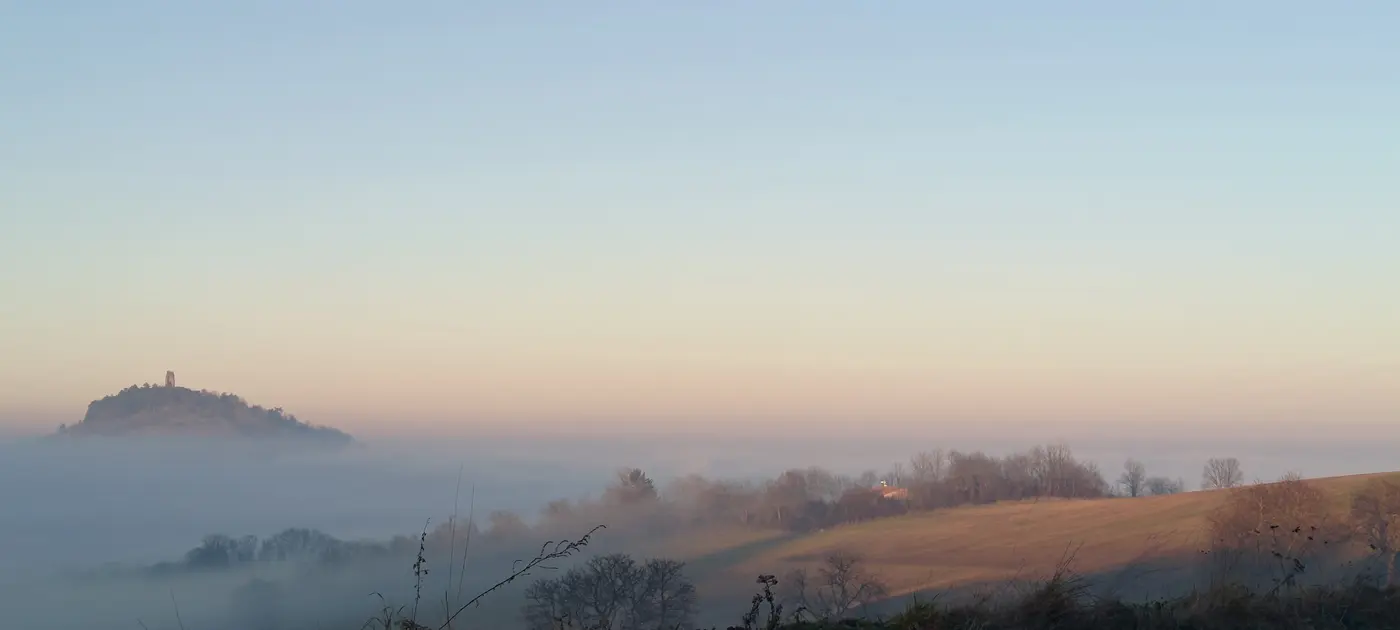
The slope the low sun has just touched 29/12/2024
By Gus
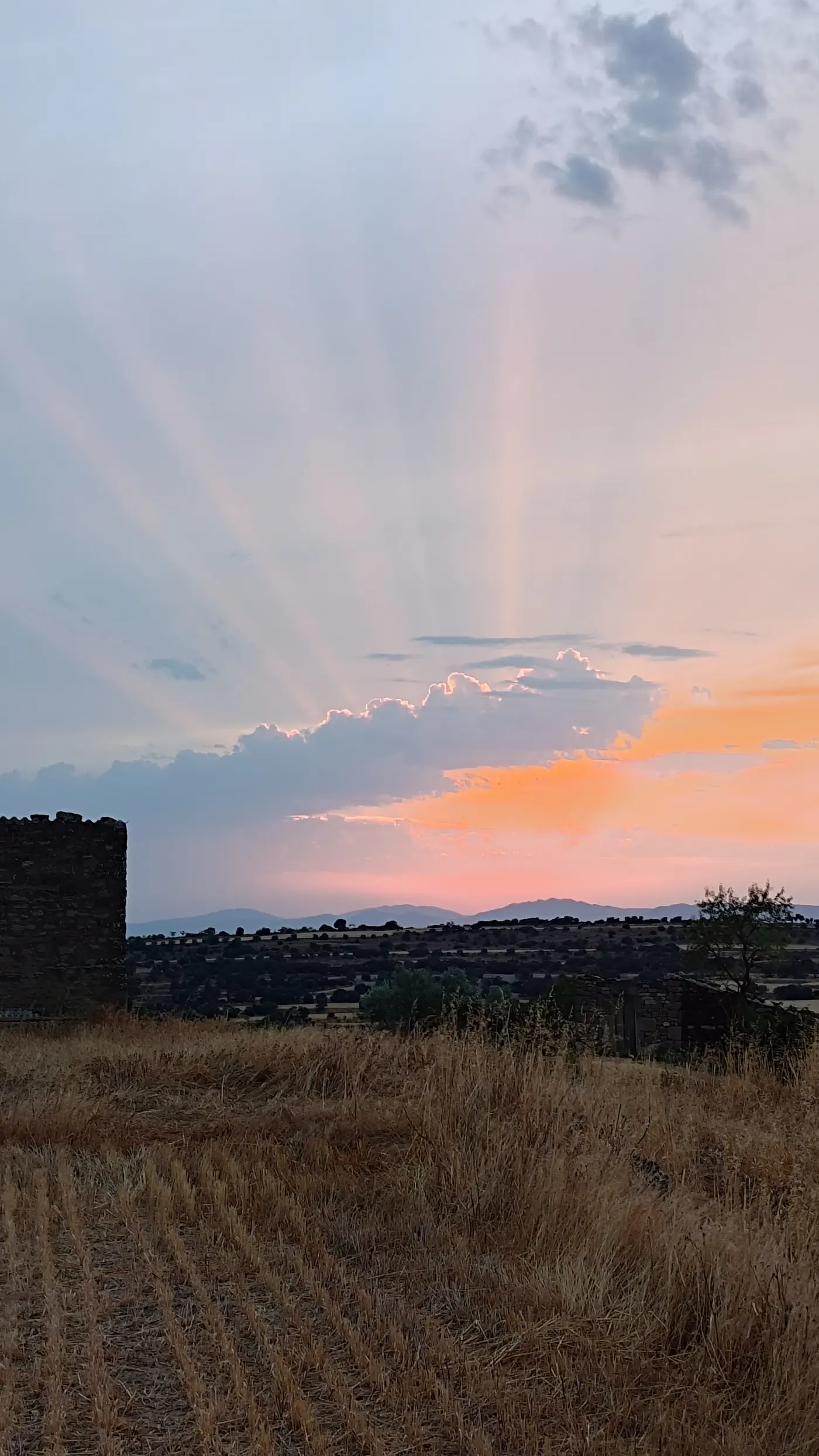
Rays fanning out over a field of stubble 10/08/2026
By Gus
What I sell
I sell these devices. Here is what that changes
This site started out as my logbook of exposures. Today it is also a point of sale. The twelve devices on this site can be ordered from me. The contact form is the only way to order one.
What that changes. I have an interest in your buying. I make money when you order a device through this site. You have every right to read these pages knowing it.
What it does not change, and what can be checked page by page. The twelve product entries carry their weak points, in the same place and at the same size as their strong points. No manufacturer proofreads these pages. The specifications published are the manufacturers' own, sourced one by one. They do not change according to what happens to be available for sale. The comparison ranks nothing. It measures the hours spent with the devices that were used to make my images.
What a partnership can be. A club, an association, a school, a town council, a shop, a manufacturer: I answer. What is open to discussion comes down to three things. A device lent for the length of a trial. A session in front of a group. An observing evening put together jointly. Say what you are proposing, for when, and for how many people.
What a partnership does not include. A paid review, an entry proofread by the brand, a place in the comparison. A device lent for a trial is flagged as such on the entry that talks about it.
If you ever find a figure on this site arranged in favour of what I sell, write and tell me. The correction will be made and dated, like the others.
Rights
On the use of the images
The astrophotographs on this site belong to me. They are not royalty free. For teaching, community or press use, write in: the answer is usually yes, with a credit.
The brands cited belong to their respective owners. I am not affiliated with any of them, I receive nothing from them, and I publish no commissioned links. I do, on the other hand, sell the devices I compare, and I earn an income from them: that is written above, in plain words. The brand overlays present on the original captures have been removed from the images published here.