
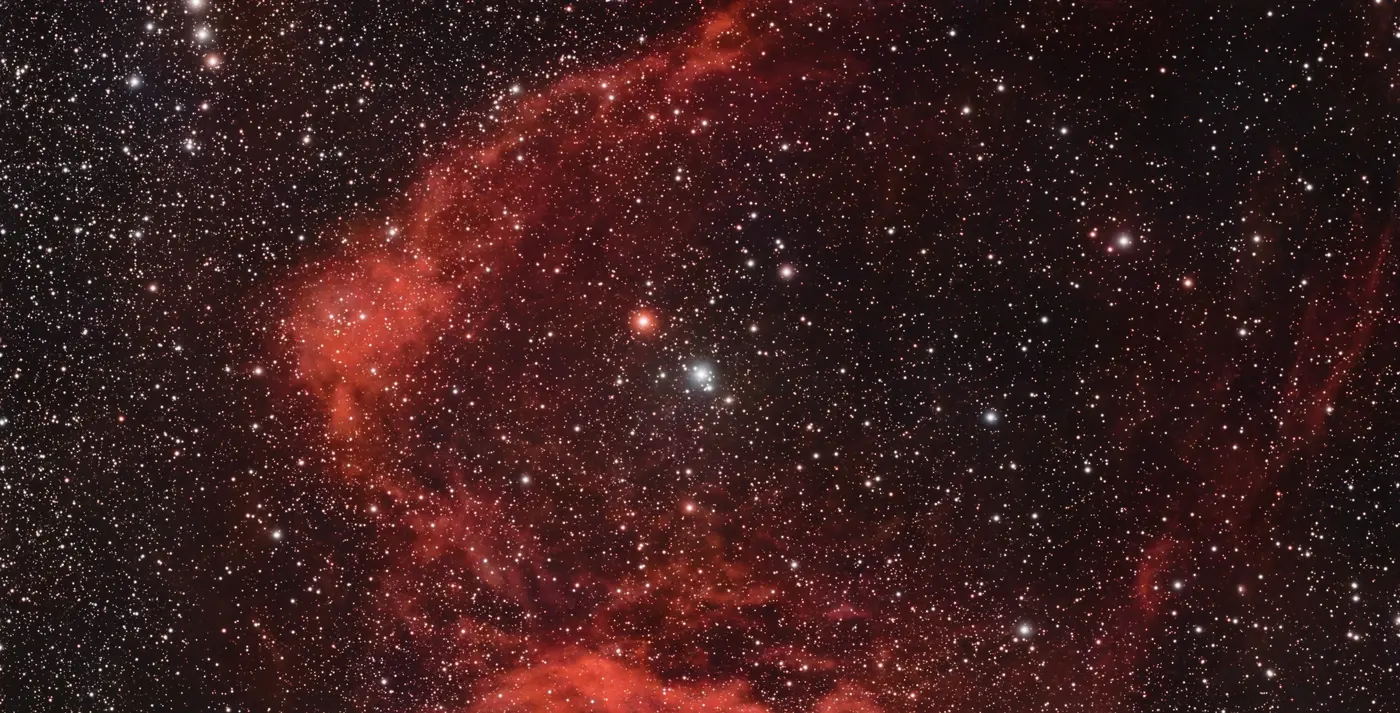
Sh2-129 · Cepheus
Nébuleuse de la Chauve-Souris volante
25h 12m 2 shots
0 towards 25h 12m · cumulative integration on this object
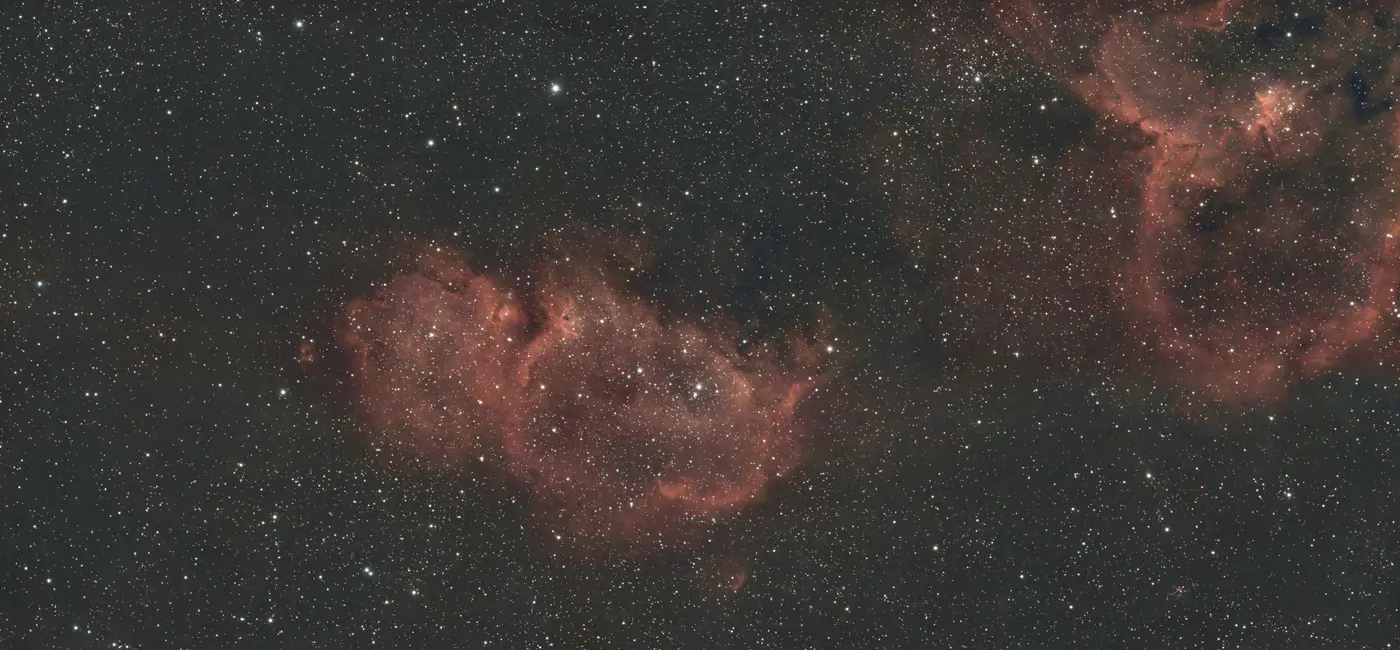
Nebula · Vulpecula
The first planetary nebula ever observed: Charles Messier discovered it in Vulpecula on 12 July 1764.
Le Cœur et l'Âme · Photograph by the author · 3h 47m of exposure, DwarfLab DWARF 3
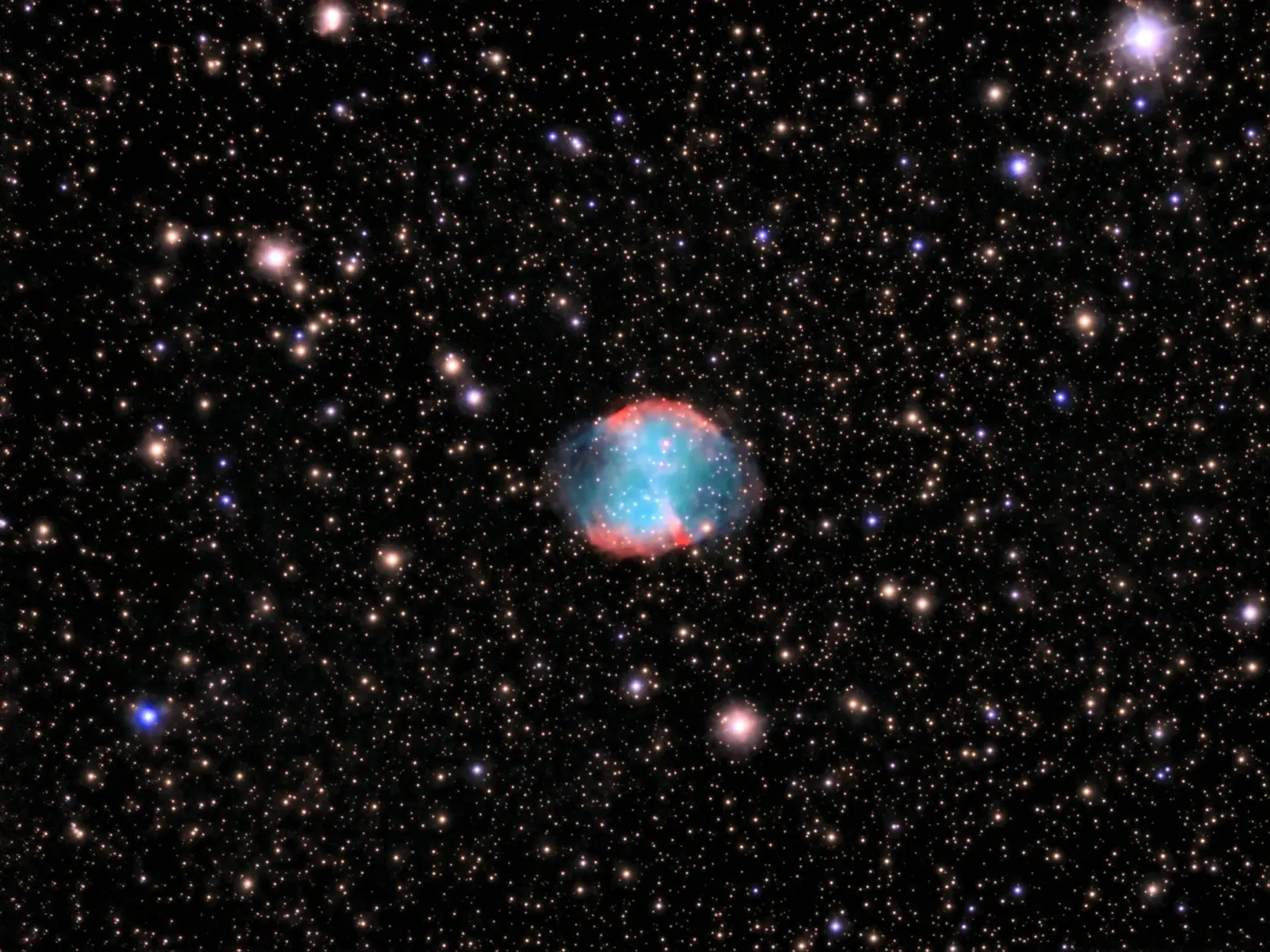
It is about 1,250 light-years away, according to the parallaxes measured by Gaia, and covers 6.7 arcminutes. It owes its name, the Dumbbell, to John Herschel, who described it as shaped like a dumbbell. In the photo, a blue-green body carries two lobes edged with red, at the top and bottom, and a paler bluish halo closes the oval on either side, in a field crowded with stars.
Sources: Wikipédia en français, Nébuleuse de l'Haltère, NASA, catalogue Messier de Hubble, Messier 27. A figure wrong? Report it.
duration not logged 1 shot
0 towards 25h 12m · cumulative integration on this object
Temps d'intégration : the total exposure time, the sum of every exposure stacked on an object.
The album date is the one the photo album gives the file, not the date of the shot: the device burns none into this image.
In the same family
Sh2-129 · Cepheus
25h 12m 2 shots
0 towards 25h 12m · cumulative integration on this object
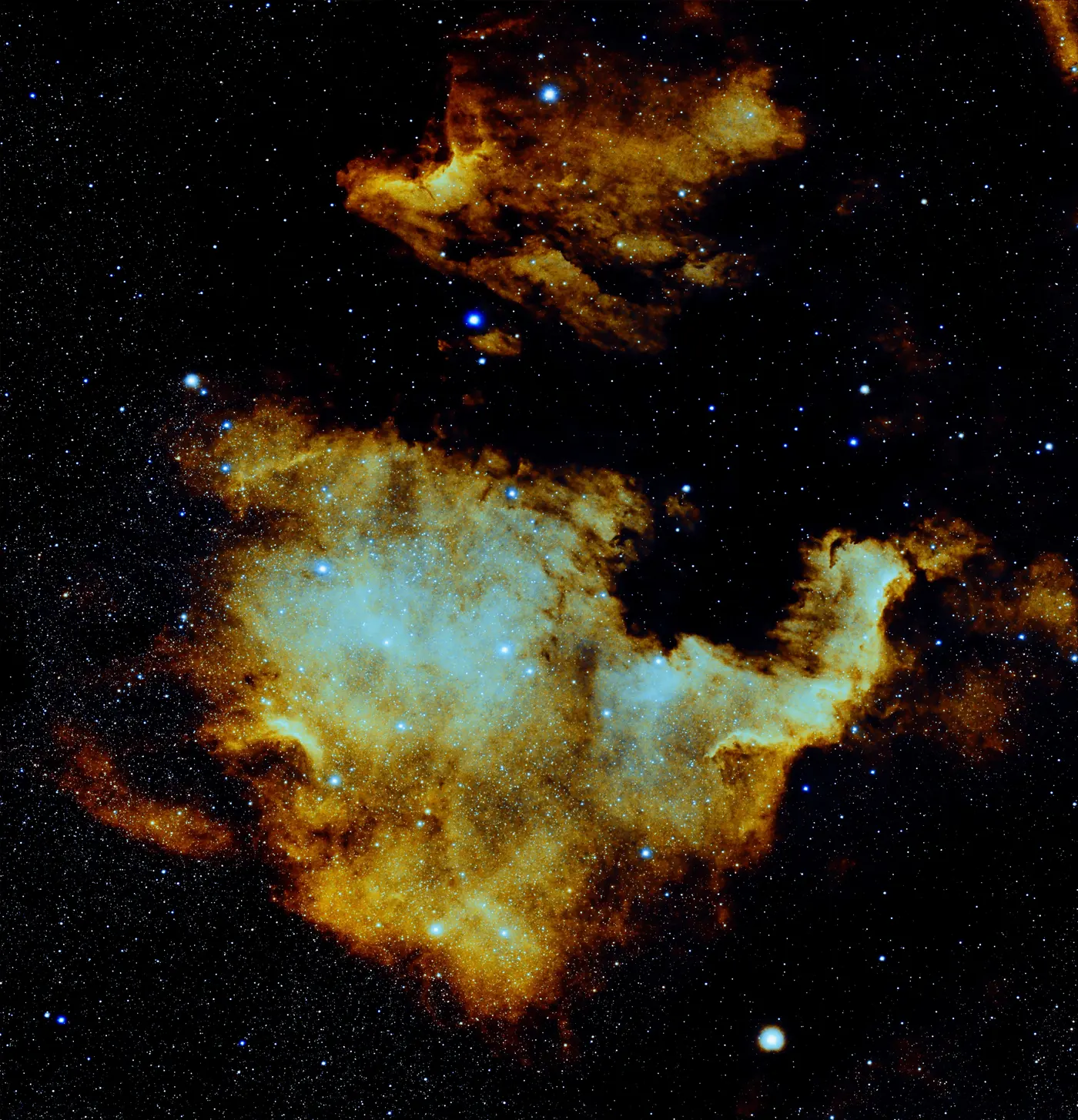
NGC 7000 · IC 5070 · Cygnus
22h 12m 3 shots
0 towards 25h 12m · cumulative integration on this object
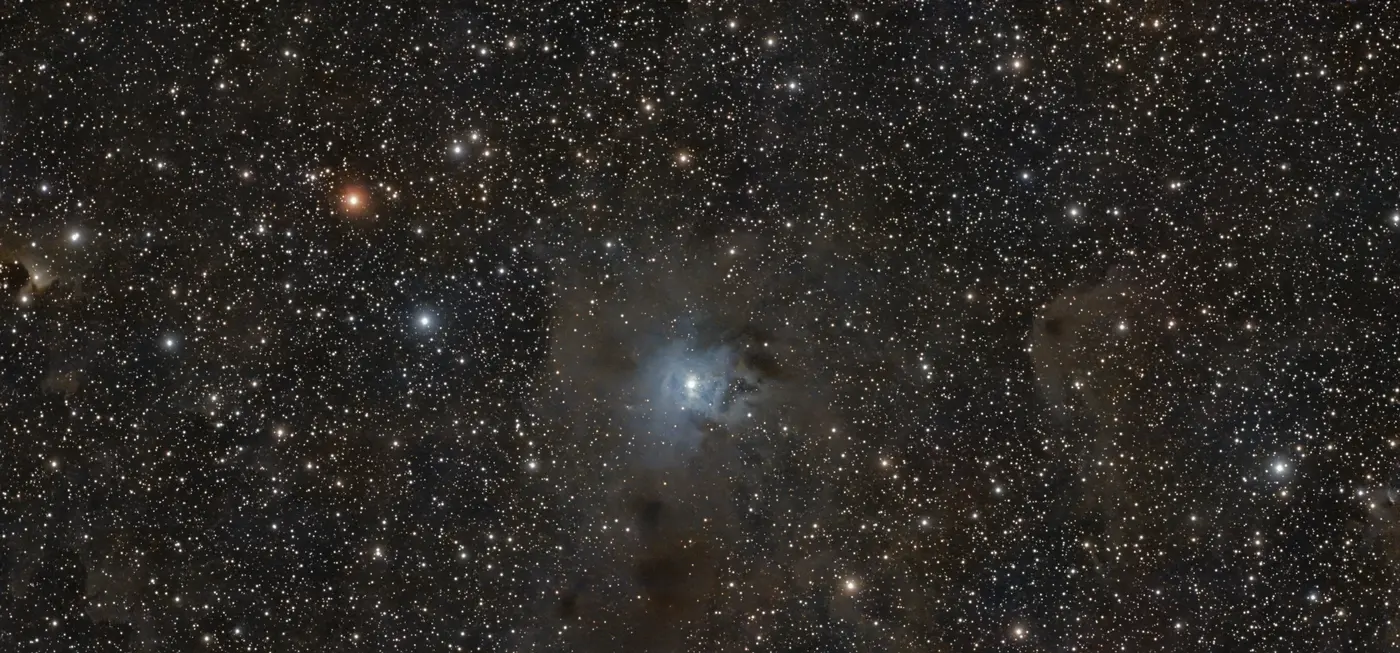
NGC 7023 · Cepheus
11h 34m 4 shots
0 towards 25h 12m · cumulative integration on this object